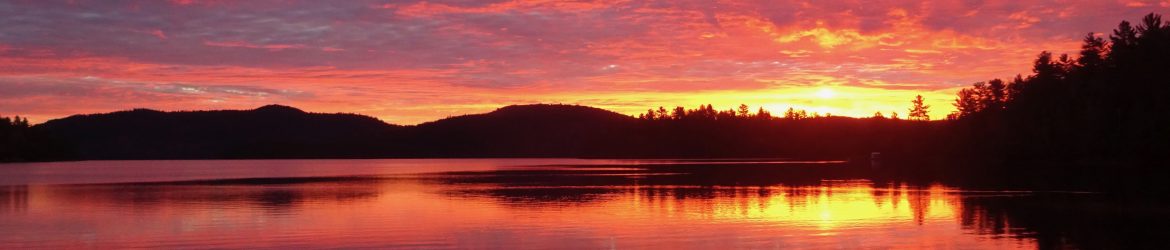
Editor’s look at Summer 2024
Text by Christie Ouellet
Often, we fail to recognize the vital connection between forests and our everyday actins, yet they play a crucial role in our health and the overall health of our planet. Last summer’s disastrous fires devastated thousands of hectares of forest, and as residents of the Lac Heney Watershed, we are acutely aware of this threat.
Across the globe, we have witnessed unprecedented regional disasters. Heatwaves, torrential rains, extreme temperatures, water shortages, and underground water depletion jeopardize agricultural production and impact our health and way of life. The May 4th TV edition of “La semaine verte,” produced by Radio Canada, highlights the impact of climate change on agriculture and the critical issue of irrigation. Click the above link to view interesting solutions to maintain agricultural production.
Reports of mining claims in the Outaouais present a new threat. The quest for precious metals such as graphite and lithium is attractive
Thank you to all the collaborators, without whom the Newsletter would not be possible: Ashwin, Chantal, Diane, Karen, Liz, Michael, Nancy, Rees, Rock, Sean, Ted, Tom and Tony. And Olivier Maheu for doing the page setting.
The child pictured is Aiden, the grandson of Ted and Diane Billey. Inspired by his grandfather, he is attempting to catch his first fish.
Aiden symbolizes a ray of hope, he represents what we are all fighting for: a thriving lake that sustains a wide variety of land and sea creatures along with pristine water that we actively strive to preserve. This is how we want Lake Heney to remain.
The BVLH Association encourage individuals and families to adopt responsible practices that will help maintain a flourishing environment.

Community news
Annual General Meeting of Members
The Bassin Versant du Lac Heney Watershed Association Annual Meeting will take place at 10.30 am, on Sunday July 21st at the Lac Sainte-Marie Community Centre, along with the Lac Heney Foundation scheduled for 10.00 am.
Science & Environment Committee Invitation
For a second consecutive year, the Bassin Versant du Lac Heney Watershed Association participates at the Fête des voisins of Lac-Sainte-Marie and the opening of the market Les Saveurs de la Vallée in Gracefield. We are pleased to invite you to meet us on Saturday, June 8th, 10 to 5pm in Lac-Sainte-Marie, and on June 14, from noon to 5 pm, in Gracefield.
We will provide you with information on protecting the shores of our lakes, Heney, Barbue, Desormeaux, Noir and Vert, and also on the shoreline regulations that apply.
We will also distribute samples of seeds of the magnificent flowers found growing wild on the shores of the lakes, and how to plant them to beautifully revegetate the shores, with the aim of increasing the health of our lakes. These flowers are very attractive to butterflies, pollinators and hummingbirds. We hope to see many of you there.
Membership Drive 2024-2025
Tony VanDuzer, Chair, Membership Committee
It is finally Spring, and we are kicking off our Membership Drive for 2024-2025. Being a member of the Bassin Versant du Lac Heney Watershed Association helps us to secure your enjoyment of our lakes by supporting your volunteer board’s efforts to monitor lake quality and to advocate for municipal policies that protect them. It also entitles you to vote and have your say (and some food and drink) at the Association’s Annual Meeting this summer.
If you are not a member, please consider joining us. Increasing our membership numbers strengthens our voice on the issues you care about, including water quality, road repaving, and mining claims. If you are already a member, now is the time to renew.
We have made the process of joining and renewing easier this year and the option to pay with a credit card has been made available again. Click here to access our new membership page.
Thank you for your support!
Chemin Lac Desormeaux in distress, Linda Cucca and Julie Bilodeau launched a petition to improve pave it.
By Christine Ouellet
Last year at the 2023 AGM, some of you raised the issue of the terrible condition of Chemin Lac Desormeaux and you will be pleased to read that a petition was initiated by Linda Cucca, a Lake Heney resident, to put some pressure on the Ville de Gracefield to pave the Chemin du Lac Desormeaux.
Linda Cucca, Julie Bilodeau, and a group of 10 residents launched a petition requesting that the Gracefield municipality improve Chemin Lac Desormeaux, gathering nearly 600 signatures. Chemin du Lac Desormeaux serves the residents of Lac Heney, Desormeaux and the broader Northfield community and requires constant maintenance. This year, the road has deteriorated significantly, due to many thaw-freeze cycles throughout the winter. Driving over the numerous unavoidable potholes, even at low speeds, increases the risk of damaging a car’s suspension, muffler, and other undercarriage parts.


Following conversations with exasperated locals and cottagers, the group, led by Linda Cucca and Julie Bilodeau, gathered at the Gracefield Town Hall in March to address concerns with Mayor Caron. The main issues discussed during the meeting were:
- The poor quality of sand used on the road last year, which further damaged its condition.
- Increased traffic on the road due to the new Trail System du Lac-Mud, leading to more wear and tear.
- The decision to pave less-used roads in Gracefield, raising questions about the prioritization of Chemin du Lac Desormeaux’s needs.
Mayor Caron was attentive to the group’s concerns. He acknowledged that the sand used last year was substandard and promised to use a better grade of gravel for repairs this summer. He also noted that the higher volume of traffic leading to Lac Mud Trail would continue to deteriorate the road. He suggested a petition to apply pressure and to establish contact with Depute Robert Bussière.
A second Town Hall meeting took place on May 13th, led by Julie Therien, Assistant Director General of Gracefield Municipality, in the absence of Mayor Caron. The meeting led to more questions to which the group is seeking answers.
Fishing on Lac Heney with Ted Billey
By Liz Stirling
I asked Ted Billey, the Treasurer of the lake association, to tell me about his passion for fishing on Lac Heney. Here is how he describes it.
I like many things about fishing. I have always liked being on the water. It’s fun to teach someone about fishing, or fish with another experienced fisherman and share tips and fishing stories, or be just by yourself in the wonderful peaceful, solitude.
I started in my early teens in the west end of Ottawa where my family lived close to the Ottawa River. We didn’t have a boat, but I would take my gear down to the shore cast from there. I often thought: “Boy! If I had a boat, would I catch so many fish?’


My older brother took a job in northern Canada at a Hudson’s Bay depot and sent home photos of fish—huge pike and char, as he was living around the Arctic Circle. These photos inspired me. I later went up to Cambridge Bay, north of the Arctic Circle. I did a bit of fishing, and as it was July, I got to see the stunning midnight sun.
What makes fishing on Lac Heney enjoyable? It’s a big lake so there is not a lot of monotony, with lots of new spots to try. I have yet to fish every spot after six years. I have a boat now, a bass boat. It was a good choice as it seems, that I am the only one in my family who likes boating. But my grandson caught his first fish last year at age five. So, I hope there will be more of “Grampy, can we go fishing tomorrow?”
Is there a preferred time of day for you to enjoy this sport?
If you can get onto the water just as the sun has come up and the water has a mist, and you feel the lake is all yours. The loons are calling, and the sound carries along the surface. But if I have a free couple of hours I will go fishing anytime. Fish tend to feed in the dark so early morning they are more active. After rainfall is also a good time and I heard some folks follow lunar cycles.
I fish for Bass close to the surface most of the summer. Trout are a bit deeper as they are looking for certain oxygen levels and water temperatures which can put them at between 25-40 feet or deeper. You need to figure out where they are then. Our trout fishery on Lake Heney was damaged by the fish farm and it has not fully recovered. Higher phosphates result in lower levels of oxygen and trout love oxygen.
We have a good bass fishery and I rarely get skunked when I go out for bass. Some folks troll, and others are cast at different spots. I almost exclusively use worms and bobbers at 5-12 feet near shoals and shores. I release everything I catch and those in my boat are ‘encouraged’ to do the same. This makes for a healthy fishery – I have caught the same fish on separate occasions! I could tell by the scarring on his side.
What type of fish do you typically catch?
Bass. The season usually opens in mid-June and the trout season opens at the end of April, this year it was on April 26. Quebec is divided into zones, and we are in Zone 10. The regulations explain what fish are in season and the rules governing how you can fish for them. We must throw back any trout under 45 cm or about 18 inches. The use of minnows (live or dead) is prohibited. Worms are ok. All of this is explained on the provincial website.
Trout don’t reach breeding maturity until 7 years old. That is maybe why it is taking a lot of time to recover. The big ones are the breeders so please throw them back! I’m told that the meat on the large ones is grainy and not that great. The lake’s oxygen, phosphate, and temperature must be in a desirable zone or trout won’t prosper. As Heney continues to improve that optimal zone for oxygen and temperature for trout will also improve, a little each year. Our lake has not reached the point where we can pursue a stocking program yet.
Are there rules or special licenses property owners need to know about to fish in this area?
You must get an annual fishing license or a three-day license. Until this year you could buy the licence at your local shop. Now it is online as a provincial website.
My final message – let’s share the lake responsibly and be sensitive to people who fish. Bowriders, jet skis, and wake boats make big waves and can topple a small boat. Please be responsible. Keep your distance, slow down, and let the fishing folk fish.

A Fisherman Story: My friend Eli loves to fish and that day, after being out on the lake and catching nothing, I wanted to take another friend out to look at the lake. Eli asked if he could fish off the dock while waiting. I showed him where the most productive spot was. When We returned 30 minutes later, we could see that Eli had caught something and was keeping it in the water… he explained he had caught it about 20 minutes earlier and wanted a picture, so he kept it in the water and waited. We took this picture… then released the fish back.
Wash your Boats to protect our lakes from Aquatic Invasive Species
By Karen Richardson
Aquatic invasive species (AIS) can invade lakes when they are carried in the bilge of boats, tangled on watercraft propellers or trailers, or when attached to equipment like fishing lines. Recreational boating can lead to spread AIS, which happens when species attach to hulls and other submerged areas of boats or equipment. These species are often quite small and travel with the vessel to new areas, where they eventually dislodge and can become invasive.
Some examples of invasive species that threaten lake health include aquatic plants, Zebra mussels, Asian carp species, water fleas, crayfish, snails, etc. The best-known AIS, Eurasian watermilfoil, is a highly invasive aquatic plant that can form dense mats, outcompeting native vegetation, destroy lake trout spawning grounds, and increase phosphorus content which impacts water quality.
Once introduced, invasive species are very difficult and expensive to remove and the likelihood of eradicating them is almost impossible. Therefore, AIS experts are encouraging communities to focus on prevention strategies, such as installing boat washing stations, to make it easy for boaters to remove AIS when they enter or leave a waterbody.
Boat washing (for all motorized and non-motorized watercraft) is mandatory in Quebec and Ontario to prevent the spread of invasive species in lakes. It’s part of efforts to protect the local ecosystems from the negative impacts of invasive species. To prevent the introduction and spread of aquatic invasive species from recreational boating, remember to clean, drain and dry. This means (Source: Fisheries and Oceans Canada) that before entering and after exiting a body of water, inspect your recreational boating equipment, including canoes and kayaks: boat’s hull, motor, anchor, trailer, and other equipment such as fishing lines and diving gear.

Clean all equipment after use with freshwater or spray them with pure vinegar. If you find any plants and animals attached to your boating equipment:
- Remove them
- Dispose of them far from the water, in an appropriate compost or garbage bin
- Drain water from your motor, bilge, and wells on land and away from the water
- Dry equipment completely before entering another water body
- Use environment-friendly anti-fouling paint or products on your boat hull to prevent species from attaching to your boat
- Ask for information about local aquatic invasive species at the public wharves or marinas you visit.
For more information, including locations of boat washing stations, please visit the websites of local municipal offices:
- Lac Ste-Marie: https://lac-sainte-marie.com
- Gracefield: https://www.gracefield.ca
- Kazabazua: https://www.kazabazua.ca
- Blue Sea Lake: http://www.bluesea.ca
- Messines: https://www.messines.ca
- Bouchette: https://www.bouchette.ca
Mining Projects in the Lake Heney Watershed
By Karen Richardson and Chantal Landry
For some time now, we have been hearing a lot in the media about the need for critical minerals, particularly those for batteries for electric cars, and the two important minerals, lithium, and graphite. Lithium is the lightest metal and graphite is a non-metallic mineral found mainly in rocks. Mining exploration companies must first locate and take soil samples which are then analyzed to determine if they contain these mineral components. If the sample is rich in lithium or graphite, the holder of the claim (granted by the Quebec government) can decide to develop a mine in that territory. This technology is on one hand desirable i.e., reducing the use of fossil fuels such as gasoline which increase the amount of greenhouse gases, a major cause of global warming. On the other hand, there are serious concerns regarding the pollution caused by the disposal/ recycling of used/spent batteries as well as their manufacturing processes, including mining the minerals.
Indeed, mining development raises growing concerns among the public, including lake associations like the Lac Heney Watershed Association (including lakes Heney, Desormeaux, à la Barbue, Vert, Noir, and other very small lakes). What are these concerns and why do they cause such a worry?
Firstly, the mining industry is regulated under the Quebec Mining Act. This very permissive law gives extremely broad rights to mining companies, to the detriment of the environment and owners of private land and buildings throughout Quebec, including cottages. This law also does not consider the potential serious impacts on the quality of the water in our lakes, rivers and the streams that feed them. It also does not consider the impacts on underground water that supplies drinking water for humans, livestock and wildlife. This law is very outdated and needs to be revised to consider current problems linked to climate change, i.e., warming which has a direct impact on our terrestrial and aquatic ecosystems. In response to strong protest from the public as well as associations and Quebec municipalities, the Ministry of Natural Resources recently announced its intention to investigate reforming the Mining Act. But it remains to be seen whether the changes will consider the environment, the health of waterways and respect for private property.
Mining impacts include soil contamination and deterioration, deforestation, and pollution of surrounding environments, including aquatic environments. Additionally, mining needs large quantities of water from both underground and surface sources in the mineral extraction processes, water which recycles back into the environment, threatening contamination and depletion of our drinking water reserves. Finally, when a mine is closed, it leaves behind mine tailings or wastes that often are in chemical forms that significantly increase damage to the environment. In many cases, those who exploited the land for significant profit no longer exist when it is time to repair the damage. It is then up to the government, with the help of your tax dollars to clean up, but any permanent damage such as soil and water contamination cannot be repaired.
The only restrictions on mining are based on eight criteria set out by the Quebec government which are used to determine which ‘Territories are Incompatible with Mining Activity’ (or TIAMs).
The MRC de la Vallée-de-la-Gatineau and its municipalities including Gracefield and Lac-Sainte-Marie are currently working to develop a map of the MRC territory where TIAMs will be identified based on those eight criteria. However, TIAMs designations must subsequently be approved by the government. In addition, mining claims that were granted for 3 years (before the suspension came into effect for granting any new claims) during the drafting of the map (TIAMs) are not restricted by the eight criteria. After 3 years, it is possible that the claim can be renewed for 2 years. But if is not renewed, it is subject to the TIAMs. Below is a map that shows claims located in the Lac Heney Watershed territory granted for three years prior to the suspension of new claims in August 20232. For more information regarding specific claims in the area, please visit the Department of Natural Resources and Forestry, Quebec.

One of the criteria that concerns us is conservation activities. A significant part of the territory of the Lac Heney Watershed, i.e. a white-tailed deer containment area determined under the Natural Heritage Conservation Act by the Quebec Ministry of the Environment and the Fight Against Climate Change of Wildlife and Parks meets the definition of this criterion. Another criterion that concerns us specifies that a grouping of at least five built lots around a lake can justify a TIAM. An additional buffer strip of 1 kilometer, measured from the boundary of the property would be added. But that is inadequate. For example, think of an undeveloped part of our watershed, either a small lake or a forested area that is part of the Lac Heney Watershed, which is not protected by the criteria against mining because there are not five residences within the buffer area. This mine would discharge metals and chemicals damaging to water quality. This contaminated water would flow through the water table, interconnected streams, and lakes in the watershed, ultimately reaching Lac Heney and other lakes, leading to a significant increase in pollution.
It is important to know that if a mining company comes to your property to take soil samples, you have the right to refuse. The company must first notify you and your municipality and obtain your written authorization at least 30 days in advance of undertaking any exploration activities. However, the mining law says that the owner of the land must reach an agreement with the mining company. If not, the company could go to court to resolve the disagreement. The court’s decision could go as far as expropriation of the land.
This summarizes the main points of the problem of intensive mining exploration and development advocated by the provincial government. We invite you to follow the evolution of this extremely important issue which has the potential for serious environmental consequences including the health of our lakes. .
Disclaimer: While we stive for accurate and fair reporting of all issues, we acknowledge that inaccuracies may occur and we try to correct factual errors and omissions. The views expressed are not necessarily the opinion of the BVLH Association.